


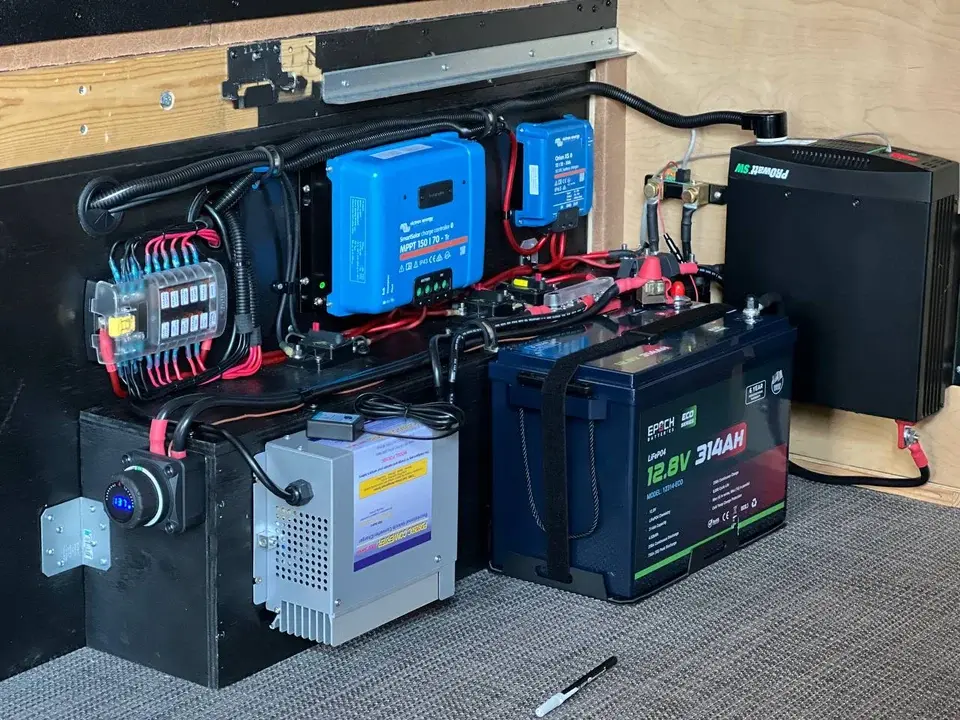
Installation & upgrades
Electrical work for your camper van
You may have fitted a battery and inverter but still need a charging solution. Or your camper may already work well, except for one circuit or a planned rooftop air conditioner. You do not need a finished design before asking for help.
Tell us what is installed, what is working and what you want the van to do. Our electrical services cover individual additions as well as the design, wiring and troubleshooting involved in moving a build forward.
Shore power installation
Add or upgrade a connection for external AC power. The inlet, onboard distribution and charging equipment need to suit the supply and the rest of the installation.
Solar controller upgrades
Install or replace a solar charge controller to match the panels and battery system. Panel voltage, charging limits and battery requirements matter when choosing a controller.
DC-DC charger upgrades
Add or update charging from the vehicle to the house battery. Charger selection and configuration depend on the alternator, battery requirements and existing installation.
Electrical troubleshooting
Intermittent charging, a device that stops working or an unexplained shutdown can have different causes. Describe when the problem appears: while driving, plugged in, in sunshine or when a particular appliance starts. That context helps focus the diagnosis instead of replacing parts by guesswork.
System design & wiring
For a new layout or a partly finished conversion, we can discuss the equipment, circuits and wiring the project needs. Share your plans and future additions as well as the devices you already own. Cable routing, protection, mounting and access for service are part of the system—not finishing touches.
12V & 120V rooftop A/C
We offer installation and upgrades for van rooftop air conditioners. The unit’s specified supply, roof fitment and power requirements need to be checked against your van. A 12V DC unit and a 120V AC unit place different demands on the installation; neither is a universal drop-in upgrade.
For other equipment and conversion work, explore our Sprinter upgrades and installations.
Before an upgrade
What your existing system needs to tell us
A larger battery, a new controller or another panel is not automatically the answer. First, the equipment needs to work together. It also needs to suit how you use the van: driving between stops, staying at powered campsites or spending longer periods parked without a hookup.
| What to review | Why it matters |
|---|---|
| Existing equipment | Battery type and model, chargers, inverter, solar controller and any available wiring information. A component name alone does not establish compatibility. |
| Intended loads | The appliances you want to run, their power requirements and how long you expect to use them. Include planned additions, particularly rooftop A/C. |
| Charging sources | What is available from shore power, solar and vehicle charging, and which sources you will actually use on a typical trip. |
Manufacturers specify different voltage and current limits for different equipment. For example, Victron’s MPPT documentation distinguishes panel-voltage limits, charging current and supported battery voltages. The right match depends on the actual models, rather than the appearance or color of a component.
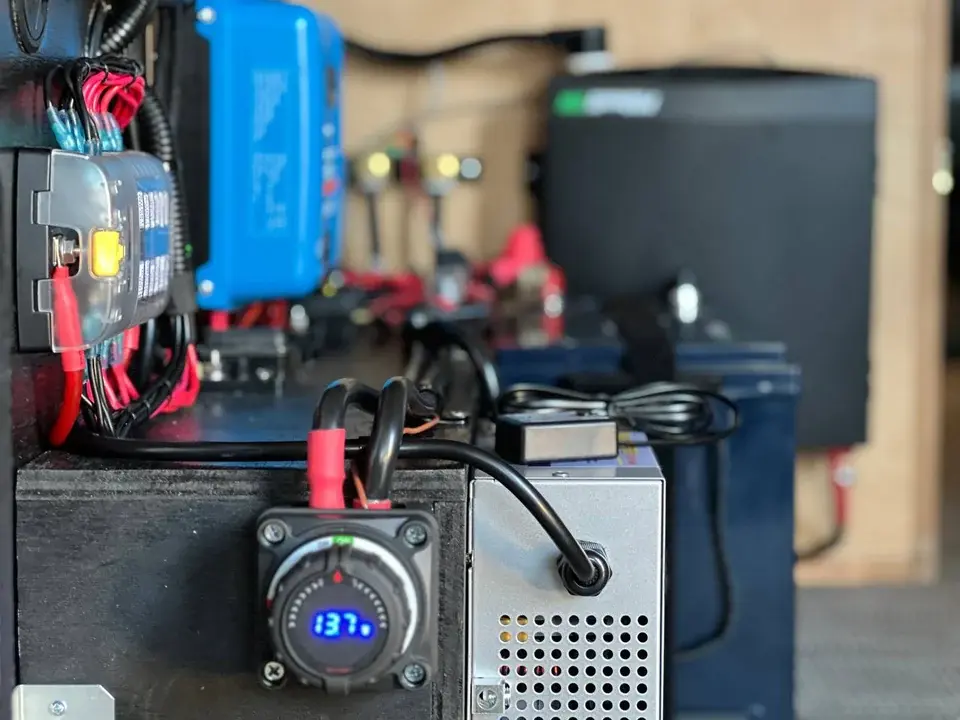
Power needs
Planning for rooftop air conditioning
Tell us whether you want cooling while plugged in, while driving or when parked away from a hookup. These are different use cases. Battery capacity, the selected A/C unit, any required inverter and the available charging all affect what is practical.
A battery label or the number of roof panels is not enough to promise a run time. We need the actual equipment specifications and operating expectations before discussing an upgrade. Roof space, mounting requirements and other fitted accessories also need to be considered.
Before your visit
Bring your plans, equipment details and questions
You do not need a polished drawing or every answer. A few clear photos and an equipment list are a useful start. If someone else began the conversion, bring any diagrams, manuals or records they supplied.
Your project checklist
- Van model and year, and the type of conversion
- Battery, charger, inverter, solar controller and A/C model information
- Photos of the installation and any available wiring diagram
- What works, what does not, and when the problem appears
- What you want to power and how you expect to use the van
How we plan the next step
- Describe your project
Share the current setup, the issue and the work you would like help with.
- Review the installation
Arrange an assessment appropriate to the equipment and the concerns you have described.
- Agree the work
Discuss the findings and proposed scope before deciding which installation or upgrade to proceed with.
If your plans are still evolving, say so. It is more useful to discuss the intended use early than to choose a charger, battery or A/C unit first and discover that other parts of the build need to change.
Common questions
Questions about your electrical project
Can you help finish a partly completed electrical build?
Yes. Electrical installation, design, wiring and troubleshooting are services we offer. Share the equipment list and what remains unfinished. We need to review the existing installation before confirming the work it needs.
Do I need to replace the whole system to upgrade charging?
Not necessarily. A controller or DC-DC charger upgrade may be possible, but it depends on the equipment already fitted, its requirements and the condition of the installation. An assessment helps distinguish a specific addition from work that affects other components.
Can solar panels run a rooftop air conditioner?
That depends on the A/C unit, the available solar input and the rest of the power system. Solar output varies, and battery and inverter requirements also matter. Do not assume that adding panels guarantees continuous cooling; discuss the actual equipment and intended use first.
Should I buy the equipment before contacting you?
It is useful to discuss the plan before buying additional parts. If you already have equipment, send its model information and explain what you want it to do. We can discuss whether it belongs in the proposed setup rather than assuming it can all be connected as supplied.